10
Milpirri: A revitalisation movement, a purlapa or a festival?
Introduction
Lajamanu is the site of a northern Warlpiri community with a population of approximately 700 individuals. The people call themselves Warnayaka Warlpiri. The town site and surrounding Country were once part of the Wave Hill cattle station; they were excised for an Aboriginal Reserve in about 1950 when Warlpiri people were forcibly moved from southern concentrations of the Warlpiri nation, especially Yuendumu and the Lander River (now Willowra). Prior to Warlpiri occupation, the land belonged traditionally to Gurindji Aboriginal people, who now primarily occupy the town of Wave Hill/Daguragu, north of Lajamanu. The contradiction between traditional ownership and the contemporary occupation of Lajamanu has been a source of unease for its Warlpiri occupiers and the cause of Warlpiri attempts to legitimise the situation. The Aboriginal status of Lajamanu perhaps partly explains the innovation in ceremonial performance represented by Milpirri.
In 1969–1980, Wild carried out field research on Warlpiri songs and dances in Lajamanu, then called Hooker Creek, after the semi-permanent water course on which the town is based (see Wild 1975). At that time, ceremonial activity occupied a large proportion of the time of both women and men, and the future continuity of singing and dancing seemed assured. This optimism was reinforced by the success of the Warlpiri/Gurindji Land Claim (based on the federal 1976 Aboriginal Land Rights (Northern Territory) Act), which rested heavily on the relationship between songs and dances and relationships to land. Warlpiri and Gurindji peoples agreed to present one land claim, thus avoiding the issue of the border between the two (see Central Land Council et al. 1978).
Wild returned to Lajamanu in 2007 under a research grant to return recordings of songs made earlier (1969–1980) and investigate the current situation of song performance. Although the return of the song recordings was politely received, it seemed that the songs had largely disappeared because the ceremonies were no longer performed. This situation had troubled local Warlpiri man Steven Jampijinpa Patrick. Jampijinpa is the son of Jerry Jangala Patrick, one of the original settlers of Lajamanu in the 1950s. While still steeped in traditional Warlpiri culture, Jangala embraced elements of the dominant Australian culture and became the pastor of the Baptist Church in Lajamanu.1 With this fusion of traditions by his father, Jampijinpa was destined to take cultural fusion in another direction.
In 2005, Jampijinpa was a Community Liaison Officer in the Lajamanu Community School, working with school teacher Alan Box. Box and Jampijinpa devised a plan to revitalise Warlpiri ceremonies in Lajamanu, working together with the Lajamanu Community School and Tracks Dance Company (Darwin). The centrepiece of the plan was an evening performance based on a traditional Warlpiri ceremony that included contemporary songs and dances as well as traditional performance elements. Tracks Dance Company, which had been working with elements of the Lajamanu community on dance projects for some years, was to be the choreographer and designer of the performance in consultation with Jampijinpa, the Artistic Director. The school initially provided logistical support for the project, which included other elements in addition to the evening performance. The project was called Milpirri, a Warlpiri word meaning “Storm Cloud”, signifying the coming together of two forces, hot and cold air (or traditional and contemporary; Indigenous and settler cultures), to create rain and new growth (revitalised culture). The first evening performance of Milpirri was held in 2005, and it has been held in most alternate years since then (see Tracks Dance Company 2023).
Wild returned again to Lajamanu in 2008, introducing Yukihiro Doi, a PhD student, to the community. Doi focused his research on Milpirri, which he observed and documented in the following years (2009–2012) during his primary period of fieldwork. Doi and Jampijinpa worked closely together on this research and later jointly presented their work at a World Conference of the International Council for Traditional Music in Canada in 2011, followed by a second presentation at Tenri University, Japan. The following year Jampijinpa was awarded an Indigenous Discovery Research Fellowship at the Australian National University (ANU) by the Australian Research Council. The purpose of the award was to enable Jampijinpa to explore further records of Warlpiri ceremonies for return to Lajamanu and to inform future Milpirri performances. Thus, the original purposes of Wild’s visit to Lajamanu in 2007 were fulfilled by Doi’s research on Milpirri and Jampijinpa’s Research Fellowship to identify and return further research records relevant to the revival of Warlpiri ceremonies.
The remainder of this chapter will document the ceremonial situation at Lajamanu during Wild’s earlier research (1969–1980), the initial years of Milpirri (2005–2012) studied by Doi and assisted by Jampijinpa, a brief account of Tracks Dance Company and its role in relation to Milpirri, and a consideration of the kind of phenomenon that Milpirri represents.
Lajamanu (1969–1980)
Songs and dances in 1969–1980 could be considered “communications of the ancestors” because they all came from the Dreaming (jukurrpa). There were some apparent exceptions to this generalisation. First, purlapa (public songs and dances performed jointly by women and men) could be received by living people from the spirits of dead relatives (pirlirrpa) or by unrelated spirits called kurruwalpa. However, it seems that the ultimate source of these new purlapa was the Dreaming ancestors, after all. A second apparent exception were the songs sung in the local Baptist Church: mostly English songs translated into Warlpiri. However, some Church songs were composed in the Warlpiri language by Warlpiri people and were called “Jesus purlapa”. They were like traditional purlapa but with Christian words. Only the Warlpiri people who gave the Jesus purlapa to the Church could say if they really came from the Dreaming ancestors. Finally, young adults performed songs in the country music style, accompanied by guitars. The first performers who sang in this style in Lajamanu formed a band called the Lajamanu Bushrangers. They were popular among young people. Songs recorded by Wild in 1979 comprised covers of performances by other bands. Beyond 1980, the Lajamanu Bushrangers were succeeded by other popular bands, most notably North Tanami Band and Lajamanu Teenage Band. Both bands performed in what has been dubbed the “Desert Reggae” style and achieved success outside Lajamanu. Their songs were original compositions, with some lyrics in Warlpiri and some in English. North Tanami Band released five albums, and Lajamanu Teenage Band released six albums, through CAAMA Music.2 The division in music and dance between younger and older Warlpiri people can already be seen in this period.
For most adults in Lajamanu, performances of ancestral songs and dances occupied a large proportion of time not taken up by paid employment. Performances took place either in ceremonies involving the whole community or outside ceremonies involving groups of different sizes. The performances separate from ceremonies were either by all women’s groups or all men’s groups. Warlpiri women’s group performances (yawulyu) have been well described by others (Warlpiri Women from Yuendumu 2017; Dail-Jones [Morais] 1984; Shannon 1971) and were largely inaccessible to Wild. Ceremonies involving men were boys’ initiation (Kurdiji); a cult ceremony (Kajirri), which is related to Kunapipi of Arnhem Land; Fire Ceremony (Ngajakula and Jardiwanpa, depending on the Dreaming ancestor being celebrated); and purlapa. Love Magic Songs (yilpinji) were divided into women’s songs and men’s songs and were performed separately by each sex. They were mostly performed privately by a few individuals to attract the attention of a member of the opposite sex.3
The ceremony that most integrated the community was boys’ initiation or Kurdiji, which comprised three parts: 1) performances by both women and men of ancestral Dreamings related to the boys being initiated (Marnakurrawarnu), performed over one or two evenings of all-night singing (by men) and dancing (by women) of a Women (Karnta Karnta) Dreaming (Kurdiji); 2) men’s ancestral performances leading up to the boys’ circumcision (Kirrirdikirrawarnu, performances of the several parts of boys’ initiation occurred over more than a week); and 3) the Kajirri ceremony, which, by comparison, occurred over several months, during which recently initiated boys, or “ritual novices” (Marliyarra), were further introduced to the ancestral performances for which they would become the custodians. A Fire Ceremony (Ngajakula/Jardiwanpa) was performed over several weeks by women and men, culminating in a spectacular ritualised burning of the owners of the Dreaming by their managers. A purlapa was performed over one or two evenings by women and men.
Most ceremonial performances were connected to Dreaming tracks located on traditional Warlpiri Country, which was seldom, if ever, visited by people living in Lajamanu. The songs and dances were increasingly unrelated to the lived experience of new generations of Lajamanu Warlpiri. One solution was to receive new purlapa that were related to the Country they were now occupying; one such purlapa was received by a Lajamanu man while he was sick in Darwin Hospital. At the same time, new purlapa were received that were about traditional Warlpiri Country (see an account of one such purlapa in Wild 1984). During a visit by Wild in 1979, Lajamanu was hit by a new cult ceremony called in English “The New Business” or “The Balgo Business”, which was derived from the Kimberley region of northern Western Australia.4 The “New Business” divided the community; those opposed to it camped in the church grounds for protection against forced participation in the new ceremony being performed on the outskirts of Lajamanu. The “New Business” created ceremonial links with Indigenous communities to the West and formed another response to the separation from traditional Country.
Although most performances at Lajamanu in 1969–1980 were the legacy of ancestral songs and dances brought from the Tanami Desert 20–30 years earlier by the first Warlpiri settlers, their dominance was being challenged from several directions. The Baptist Church asserted its influence through Christian songs in Warlpiri language and Warlpiri musical style (Jesus purlapa). New purlapa about the newly adopted Country were received from ancestral spirits. A whole new ceremony was adopted from northern Western Australia. Finally, young Warlpiri took the first steps to embrace the music of the universal youth culture. These signs of change in music and dance performance heralded a crisis of identity that only grew stronger over the next few decades. A similar crisis was experienced in other Indigenous communities in Northern Australia. However, due to its unique situation, the response in Lajamanu was also unique.
Tracks Dance Company
Tracks Dance Company, based in Darwin, played a crucial role in the creation of Milpirri. The company began in 1988 when one of its founders, Tim Newth, joined Browns Mart Community Arts organisation. With a background in visual art, theatre and dance, one of Newth’s earliest projects in his new role was to work with the Lajamanu community to create a theatrical production using elements of Warlpiri traditional and contemporary performance. Although he also worked with other Northern Territory Indigenous communities, Newth’s work in Lajamanu has been a central thread of his community arts work for over 30 years. David McMicken joined him a few years later, and the two became legally independent of Browns Mart in 1999 under the current name. Newth and McMicken are joint Artistic Directors of the company. Since 1988, Newth and McMicken have developed a close relationship with the Lajamanu community. It was evident in Wild’s observation of their easy acceptance by people during the preparations for the 2009 Milpirri, for which he was present. Acceptance and familiarity were earned by family visits between Lajamanu and Melbourne (Newth’s and McMicken’s home city), gruelling trips in traditional Warlpiri Country and extended stays in Lajamanu. Further, gradually, Tracks’ success in mounting multiple iterations of Milpirri has earned them respect. Milpirri’s Warlpiri Artistic Director, Steven Wanta Jampijinpa Patrick, is a Life Member of Tracks (Tracks Dance Company 2012–2023).
In comparison with other Indigenous events, including the Garma Festival, Milpirri is not necessarily aimed at being a tourist event. When anthropologist Jennifer Biddle (2005) interviewed Newth and McMicken about Milpirri as a specific community-based event, not intended to tour or be nationally staged, Newth confirmed that they aimed to create a work that celebrates place and people and that it is not important for that work to tour or be more broadly recognised. Tracks believed that it ran side-by-side with this Milpirri concept and is conscious of the Lajamanu community’s contribution to the development of the program. It is site specific (Biddle 2019).
Milpirri
In 2008, Yukihiro Doi came from Japan to ANU and first visited Lajamanu with his supervisor Stephen Wild. The student was introduced to Steven Jampijinpa and other community members and then undertook to revisit the community for his fieldwork for Milpirri in 2009. From 2008–2012, he made several field trips to Lajamanu. This section will discuss the outcomes of his research and consider the development of the series of Milpirri, each themed on notable Warlpiri rituals and being interpretations of the original event launched at Lajamanu in 2005.
Milpirri 2005
In preparation for Milpirri 2009, Doi commenced his literature research in Canberra by reading the book Ngurra-Kurlu: A Way of Working with Warlpiri People (2008), written by Jampijinpa. The Warlpiri expression ngurra-kurlu was coined and explained by Jampijinpa as the five elements of a Warlpiri world and life view. Doi’s research was complemented by other publications that were the products of ideas and efforts of both Tracks and Jampijinpa (available through the Tracks Dance Company website) on the first Milpirri in 2005. The series of Milpirri events commenced with the theme of ancestral Jardiwanpa ritual. Those involved in Milpirri insisted that Jardiwanpa had been reawakened on the occasion of the first Milpirri after several decades of being absent from community life. Tim Newth, who made Tracks’ first contact with the community, said, “Indigenous people respond to stories, the telling of their stories from the past to the present. In this way we can begin to get an understanding of the Milpirri dreaming and how they see their school and the relationship it has to their lives” (Ausdance 2011).
School children’s hip-hop and break-dance training by Tracks was also an important element leading to the stage performance with a soundtrack by Elders, Lajamanu community council members, and members of the North Tanami Band and the Lajamanu Teenage Band. The scenario of the stage consisted of a prologue, four acts and a finale. Traditional Jardiwanpa was performed as the consistent theme of the whole event since each title of the acts was attributed to an aspect of the ceremony. Makunta-wangu (matrimoiety) is explained by Jampijinpa as their own Dreaming name in relation to Emu names in accordance with Jardiwanpa songs.
Another major innovation of the event was the establishment of the four-colouring system explaining Warlpiri patricouples (see Figure 10.1). In parallel with Jampijinpa’s objective to revitalise ceremonial activities through Milpirri, he also had a co-objective to increase school attendance through the children’s participation in Milpirri. Initially, it did not result in increased attendance at Lajamanu School. However, Doi observed in later visits that the colouring system had taken root among the school children throughout the event. This colouring method, through its summary of traditional kinship, had a noticeable impact on schoolchildren and can be considered evidence for the interpretation of Milpirri as a “revitalisation movement”. Apart from the interpretation of Milpirri as a “movement”, the success of the first show in 2005 resulted in its biennial continuation. Restoring traditional songs and dances, as well as achieving unity, at least at the community level, can be seen as a significant achievement of Milpirri.
| Colour group | Patricouples |
|---|---|
| Blue | Jampijinpa, Jangala / Nampijinpa, Nangala |
| Yellow | Jungarrayi, Japaljarri / Nungarrayi, Napaljarri |
| Red | Jupurrurla, Jakamarra / Napurrurla, Nakamarra |
| Green | Japanangka, Japangardi / Napanangka, Napangardi |
Figure 10.1 Warlpiri patricouples and the four colour groups for Milpirri.
Another measure of the success of Milpirri is that, for the first time, the male Elders performed traditional ceremony on the basketball court with lighting and speakers. This can be attributed to Jampijinpa’s relationship with them and possibly his father’s seniority and respect among other older men, as explained in the documentary Kaja-Warnu-Jangka (From the Bush, Japanangka and O’Shannessy 2020; see Chapter 1, this volume). In general, Elders did not seem to have expected that the performance would have any merit, but Jampijinpa mentioned that the people involved realised that the idea of Milpirri was “much bigger than just two-way teaching in the school” (Patrick, Holmes and Box 2008).
Milpirri 2007
Several developments and new features of the second Milpirri (with a new source of funds) were the inclusion of participants from Yuendumu, the reintroduction of the traditional initiation ceremony (Kurdiji) and teaching the ideas of ngurra-kurlu with the inclusion of the Australian coat of arms. The discovery of the coincidence with the symbols of animals surely delighted local people:
Unexpectedly, we discovered that the symbols appearing throughout the Warlpiri Kurdiji Ceremony also appear in the Australian coat of arms. This revelation inspired the Old People. For years they had been wanting to find a way to get Kardiya (mainstream people) to understand Warlpiri Law. For the Old People, sharing symbols that appear on Parliament House in Canberra with the symbols of the seat of Warlpiri Law, their ceremony, marked a great hope that there could be mutual understanding. (Patrick, Holmes and Box 2008)
Milpirri aimed to include intercommunity activity from the beginning, with the involvement of the Warlpiri Triangle,5 through Jampijinpa’s school connections in the region. However, the first Milpirri was performed only by Lajamanu community members. A government agency and a major corporate sponsor, the Rio Tinto Aboriginal Fund, provided major support for Milpirri from 2007 to 2010 to hold a larger show, in terms of participants, with the help of other Warlpiri communities.
Jardiwanpa dance was also performed in 2007, but the main theme of that year’s Milpirri was Kurdiji. It was the first time that Warnayaka Warlpiri people made the Kurdiji ceremony (without men’s only sections) open to the public. There was a similarity to the first Milpirri in the movement of ancestral male dancers in the Red group with boomerangs, but the novelty was evident in yawulyu female dancers with body painting and a greater number of dancers, partly from Yuendumu. Witi (“Leafy Poles”) dance was performed by Yellow male dancers, with a tall leafy pole tied to each leg, shaken through vigorous movement of the body. This was a large-scale set of dances that was omitted in the abridged initiation ceremony called Waruwarta, which Doi observed at a Kurdiji ceremony held inside the “Aboriginal Land” sign at the entrance to Lajamanu during the Christmas holidays of 2010–2011 (see also description of the Warawata ceremony, borrowed from Luritja/Pintupi, in Curran 2020).
Several more dances were incorporated into Milpirri 2007 to be continued as a series in later Milpirri events. “Milpirri (Storm Cloud) Dance” was the title of the event, which has been performed on each occasion by a dancer from the Blue group. Wulparri (“Milky Way”) Dance, with its accompanying song Wantarri-tarri, was the last dance by Yellow and Green male dancers. Supervised by their mothers behind them, young initiated male dancers jumped continuously with a long yellow string in their hands. As they passed the string to the mothers behind, several male Elder singers could not stand by any longer and went forward to show them how to conduct the ritual.
The contemporary song “Desert People”, sung and recorded by the North Tanami Band in 2005, was danced again by all the young performers. The 2007 program had another kardiya/yapa or non-Indigenous/Indigenous fusion song called “Kurdiji Song”, which was not a part of the traditional daytime song “Marnakurrawarnu” in the Kurdiji and Waruwarta ceremonies. This new gospel-like Warlpiri song was made by Jampijinpa originally for lighting witi poles and represented the climax of the Kurdiji and Jardiwanpa ceremonies (see relaxing of the strictly traditional and introduced binaries of song in Wild 1975).
The cultural education of Milpirri was not limited to the tradition of Warlpiri people but included non-Aboriginal Australians’ heraldic design, the Australian Commonwealth coat of arms. During the show, Milpirri 2007 featured the Australian constitution with Warlpiri interpretation through their panel display of the Australian coat of arms. One of the large panels prepared by the children for the program featured the Australian coat of arms. The symbolism of the coat of arms – namely, the animals, the star and the shield (or kurdiji in Warlpiri) – was noted by the Elders, inspiring a Warlpiri representation of the coat of arms. The Milpirri focusing on Kurdiji ceremony appears to have satisfied the two-way educational purpose with the display of both the ngurra-kurlu diagram and the Australian coat of arms with respect for both the nation of Australia and its Indigenous people.
Milpirri 2009
After participating in Garma Festival 2009 in Arnhem Land and the Endurance Show by Tracks in Darwin, Doi headed for Lajamanu, followed by Tracks dance members, six weeks before Milpirri in October. Recreation combining warming-up and a game for remembering names started among the Tracks instructors and schoolchildren in a small gymnasium. The school did not have a big gymnasium but cooperated with Tracks for their project. Milpirri rehearsals for children in those days were basically an alternative to daily classes. I learned on later visits that 2009 was the last time that Milpirri had such cooperation from the school. Other Tracks staff from Darwin arrived two weeks before the event to set up a sound system at the basketball court, where children attended rehearsals after school. As many children attended and enjoyed the disco in the Youth Hall every Friday night, Milpirri’s employment of similar modern technology helped to attract residents in the remote community to it.
Female Elders sitting in line about ten metres behind male Elders on the ground painted elaborate designs in ochre and oil on their bodies in rehearsals. The atmosphere of the male performers was a little different; the senior male singers painted themselves only partly, and young men who were supposed to perform traditional dances in Milpirri were caught up in football. Due to contact difficulties, most performers did not assemble until two days before the final event.
The theme of the Milpirri 2009 program was Jurntu Purlapa, explained as a piece in the purlapa genre. Every participant was given a bracelet, depending on which of the four-coloured patricouple groupings they belonged to, worn on the left or right wrist depending on their matrimoiety, saying, “speak to the land and the land will speak back”. The Milpirri introduction commenced with Jampijinpa’s narration with the music of DJ Shadow’s “Building Stream with a Grain of Salt”. The lightning dance or Milpirri Jukurrpa Dance by a Blue male dancer and its song by senior male Elders was consistent with those in 2005 and 2007. Traditional Mangulpa (“Black-Headed Spear”) was the first dance by the Red group. The performance signifies “many important areas of law and dance through the spear and kangaroo songs, two very important bodies of legal knowledge” (Tracks Dance Company 2009).
The next scene was of the Yellow group’s performance titled “Discipline”, starting with DJ Shadow’s song, Jampijinpa’s narration and submission of a hooked boomerang and a painted stick from a Yellow boy and a Yellow girl to the Song-Men and Song-Women. During this section, traditional male dance expressed the Junma (“Stone Knife”); in the past, this created “the chest scars that are administered ceremonially as a sign that one has demonstrated learning and self-discipline” (Tracks Dance Company 2009). Doi was given a eucalyptus-leaf bunch and was accepted to join his skilled skin brothers and fathers in the snake-shaped queue wearing the Yellow design and clothes. He was regarded as the first non-Aboriginal person who performed their traditional dance in Milpirri. At a specific point, the dancers ritually rubbed the earth with the leaves, and the following women dug with their witi. After the act entitled “Respect” was performed by the four student pairs and the Green group, in the four body performances, “Responsibility” was conducted by the Blue group. After the four pairs’ action and the theme music provided by DJ Shadow, adult Blue men performed the traditional circle dance, Kurrwa (“Stone Axe”), with female dancers.
Milpirri 2009 contained the first trial of flying lanterns in the finale. This was prepared and performed by kardiya people or non-Aboriginal residents and visitors, including Stephen Wild, following Jampijinpa’s idea that Milpirri – or cloud made by the hot and cold elements – should be made by both yapa and kardiya. When the lanterns were launching, the essence of the event was sung in a new original song, Yungkaju Kurdari (“Milky Way Song”), written by Jampijinpa and sung by Zac Jakamarra Patterson of the North Tanami Band and Kenneth Jungarrayi Martin of the Lajamanu Teenage Band.
Overall, the performance was successful and well received by the audience. In general, Tracks instructors also praised the boys for dancing well, although in general they were typically younger than the hip-hop dancers of the former shows. Three days after the performance in October, Doi participated in a ritual called Kurapaka (“Blanket Exchange”), where female Elders stepped towards the back of the male Elders’ semicircle with brand new blankets in their arms. This marked the Closing Ceremony of Milpirri. This is another phase of the traditional and modern mixed life in the remote community.
In June 2010, the Australian Dance Awards in Melbourne invited Lajamanu boys for their hip-hop dance of “Lesson 3” by DJ Shadow, and they were called “Milpirri dancers”. At this point, “Milpirri Dance” was interpreted by Tracks Dance Company as any hip-hop dances performed by Lajamanu children. This usage can be considered popular, and young adults in Milpirri held the same attitude when they used the same expression.
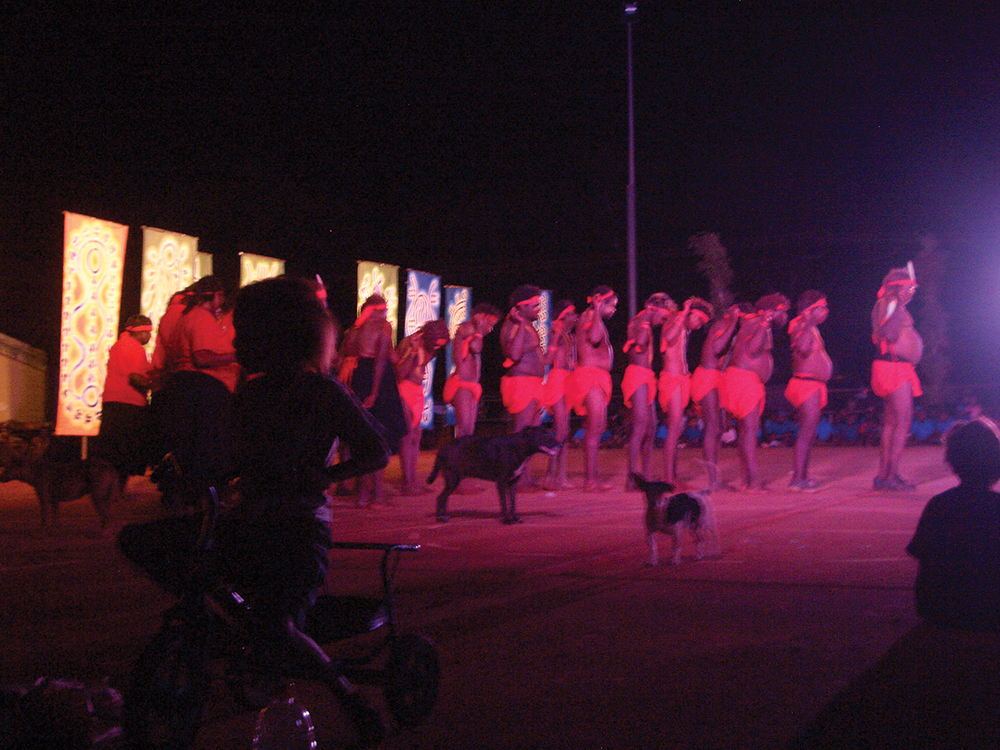
Figure 10.2 Mangulpa by male Red dancers. Photo by Yukihiro Doi.
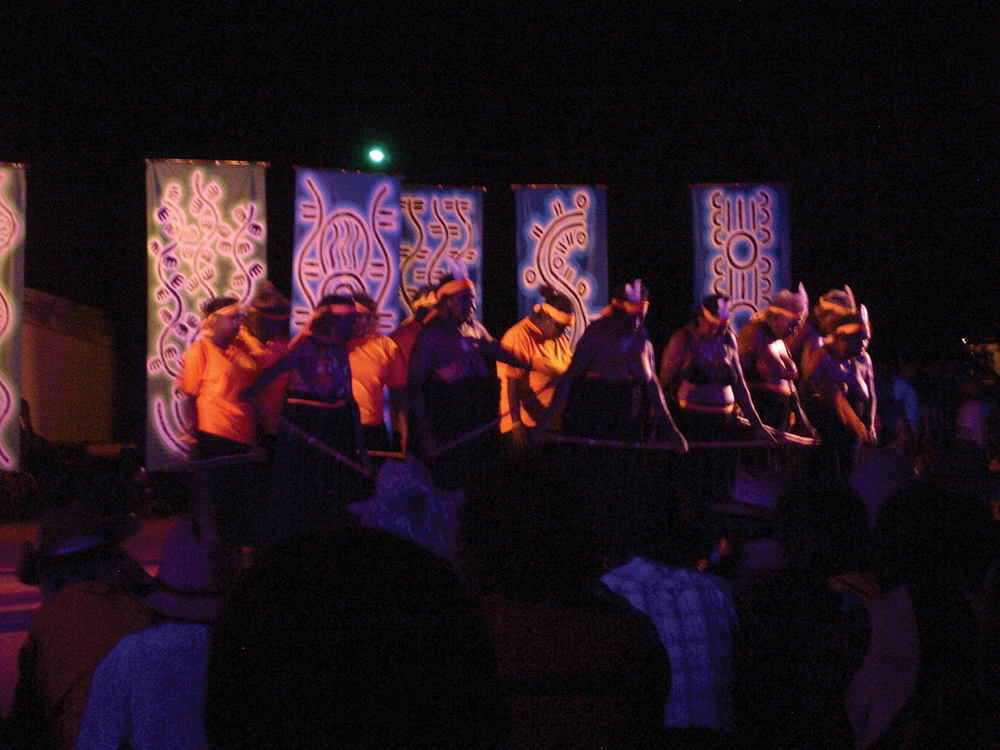
Figure 10.3 Witi by Yellow female dancers. Photo by Yukihiro Doi.
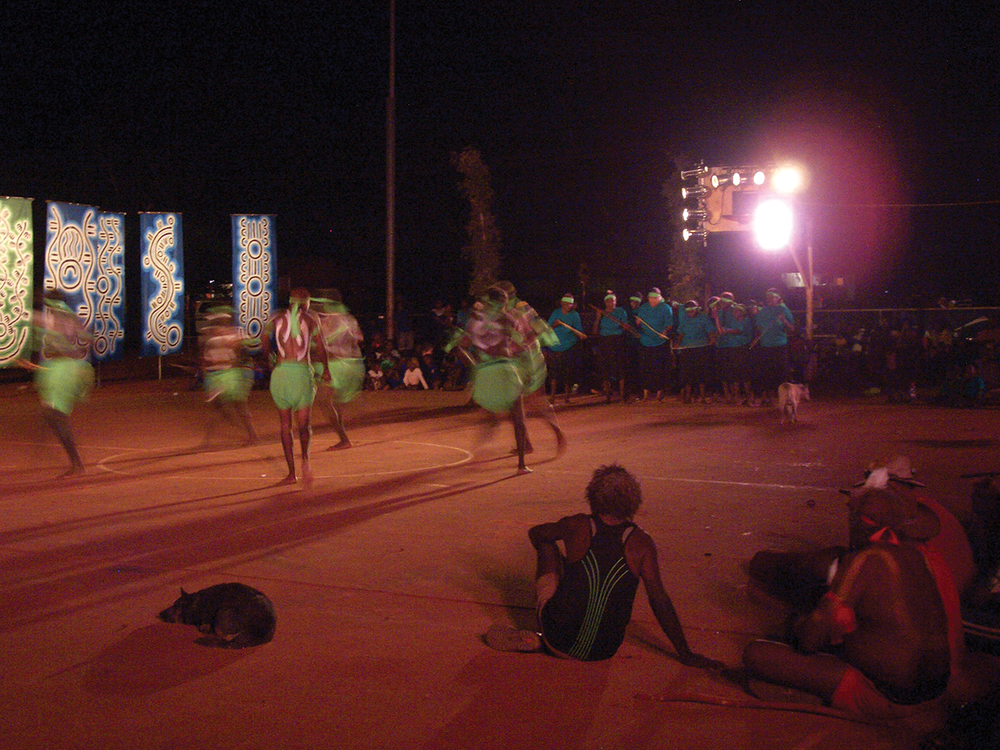
Figure 10.4 Karli and wirlki by male Green dancers. Photo by Yukihiro Doi.
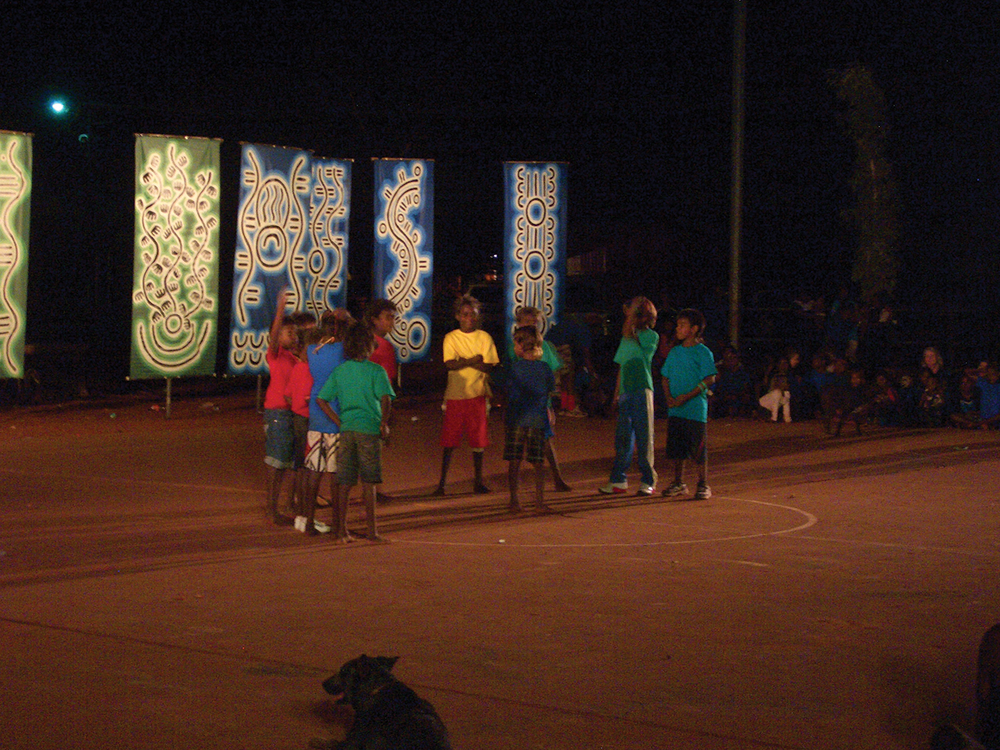
Figure 10.5 Junior boys dancing with DJ Bacon Mix. Photo by Yukihiro Doi.
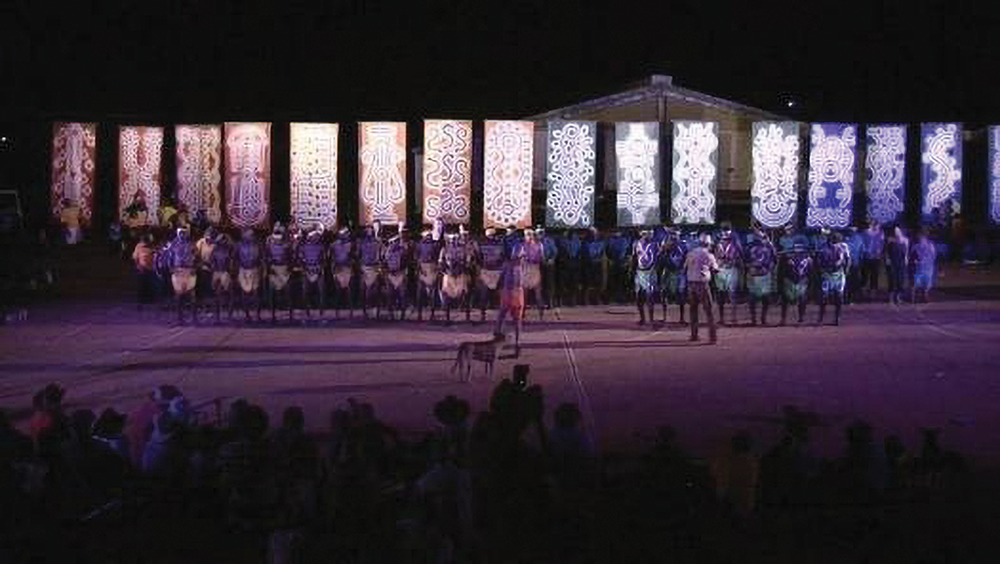
Figure 10.6 Karnanganja by Yellow and Green dancers. Photo by Yukihiro Doi.
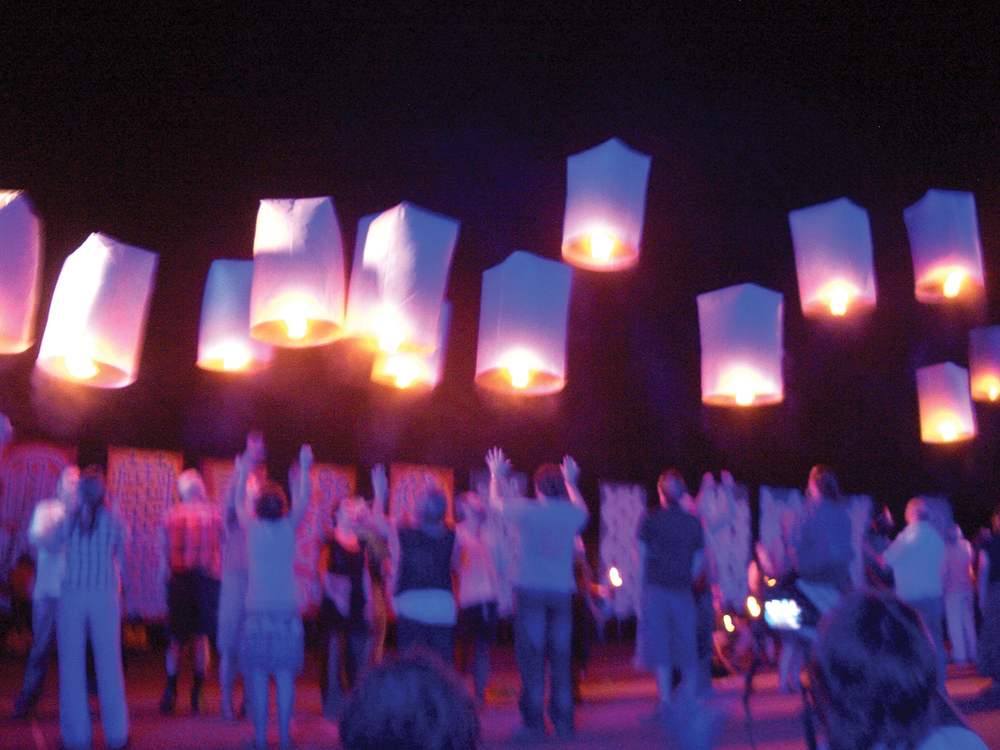
Figure 10.7 Sky Lantern being flown by kardiya people with “Yungkaju Kurdari”. Photo by Yukihiro Doi.
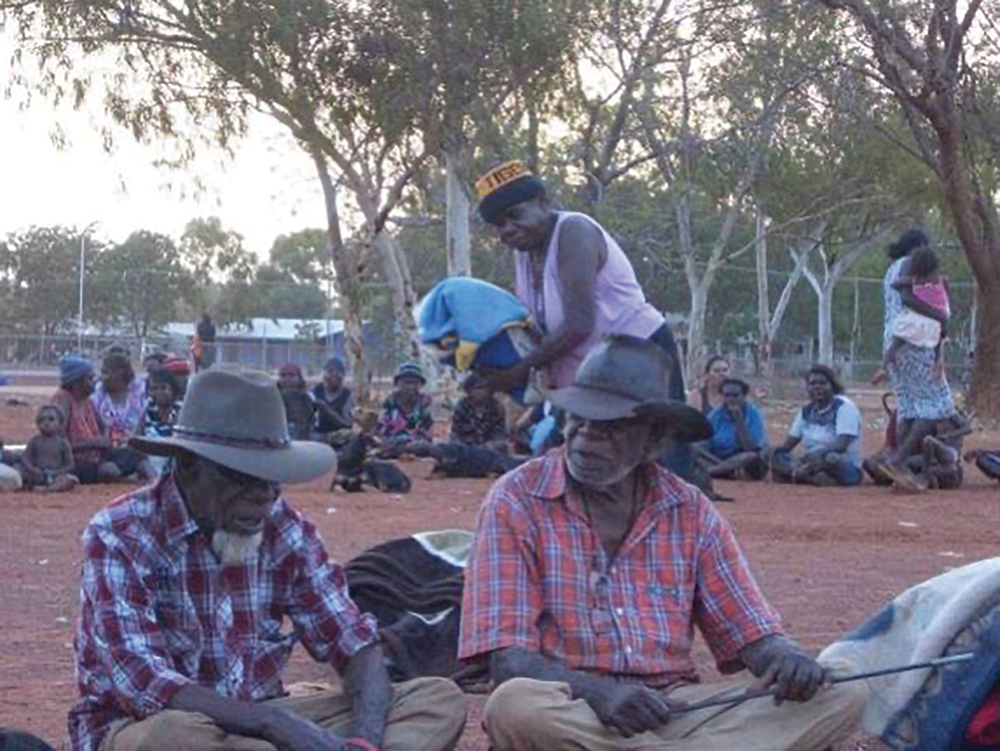
Figure 10.8 Blanket exchange after Milpirri 2009, community area near basketball court. Photo by Yukihiro Doi.
Milpirri 2011 and 2012
Except for 2020 (due to the COVID-19 pandemic), 2011 was the only year that the biennial Milpirri was cancelled. Milpirri 2011 was expected to be held at the Granites’; however, actually, it was only a workshop on a smaller scale. The reasons were the lack of funding and Sorry Business, with the dismal mood of the community due to successive deaths of several important male Elders in the year. Another factor was a new policy of Lajamanu School, which did not permit Tracks to train students during class time.
A key feature of Milpirri 2011 performed at a new basketball court without any banners was the inclusion of kurlumpurrngu (a wind instrument). During the fieldwork before the show, Doi was able to participate in the revival of the instrument and its performance, and he later found that it could contribute to interpreting the phenomenon of Milpirri. Doi had returned to Lajamanu with a yidaki (didgeridoo) bought in Darwin. At the Warnayaka Art Centre in Lajamanu, he showed it to the manager, who suddenly began to tell him that she had heard from Jerry Jangala that yapa also had a didgeridoo-like instrument in their tradition. Doi’s interview with Jangala was the beginning of their restoration project of the rare instrument called kurlumpurrngu. This wind instrument can be classified under “423.121.11 without mouthpiece (Some alp-horns)’ or ‘423.121.21.38 without mouthpiece (Asia)” in the system created by von Hornbostel and Sachs (1961, 24–27). Three male Elders remembered the instrument, probably in the 1940s; according to Jangala’s childhood memories, the kurlumpurrngu was used at a purlapa called Jalurinjirri. The following is a song of this type performed by Jerry Jangala and Teddy Jupurrurla.
Jalurinjirri Jalurinjirri,
Jalangkurrparnu Jarlangkurrparnu
(Calling all the nation. Come and join in the celebration!)
Kurlumpurrngu-na japipalyina,
Warluna matamatarla
(Let the Law shine out. Prevent the flame of culture from dying out.)
(see Doi 2016)
It was performed on advice by Jangala, who (since our visit to his outstation) had been willing to do the rare male ceremony despite the atmosphere of Sorry Business. While Doi was waiting for the performance with two kurlumpurrngu, one of which he had just finished making, Tim Newth and Jangala asked only him to dance with the musical instrument. However, he immediately asked Caleb Japanangka, who was supervising schoolchildren and waiting for his own turn at hip-hop dancing, for the favour of dancing the traditional purlapa with him. After the boys’ and girls’ hip-hop dances finished, there was a performance by three male Tracks instructors: David McMicken, Nick Power and Japanangka. Despite the absence of male Elders apart from Jangala, the audience was pleased by the traditional performance of yawulyu dancers with strong connection to Tracks Dance Company.
In October 2012, Doi returned to Lajamanu with several other ANU students to participate in Milpirri. Doi stayed there for a short time to confirm that Milpirri was back. The number of visitors, performers and variety of the program were all much greater than in 2011. The show had a formal theme of Pulyaranyi (“Winds of Change”), banners were added, and their designs were fully respected as per tradition. Tracks members stuck to their hip-hop dance, demonstrating more sophisticated fusion with traditional yawulyu songs and dances. Doi prepared witi for their performance and danced the Witi dance as in 2007 with his Yellow group brothers.
Conclusion
The title of this chapter asked what kind of phenomenon Milpirri is. It was motivated by a desire to revive ceremonial life, encourage school attendance, create an entertainment event that would attract visitors to Lajamanu and improve relations with the rest of Australia. In comparison with the lack of concern in the community in the 1970s, the loss of ceremonial activity stands out as the primary motivation for Milpirri today. This leads to the conclusion that Milpirri is a revitalisation movement. This interpretation also connects Milpirri with earlier attempts to revitalise the ceremonial life of the community. For example, the “New Business” introduced from north-western Australia in the late 1970s was intended to replace the old ceremonies transplanted from the Tanami Desert some 20 years earlier. Even the older Kajirri ceremony was probably an attempt to make the ceremonies brought from the Tanami more meaningful in the new context (Wild 1972). The revival of the instrument kulumpurrngu and the accompanying song and dance is another example thereof.
From the viewpoint of the school community, encouraging school attendance is the most important aspect of Milpirri. This argues for it being envisaged as part of the bilingual education program.6 From the point of view of Tracks Dance Company and their teaching of hip-hop dances for inclusion in Milpirri, it is primarily for entertainment and engagement, parts of which could be presented outside the community. This suggests that Milpirri is a kind of purlapa, the least restricted singing and dancing event in traditional Warlpiri culture. Finally, by comparing it with the Garma Festival in eastern Arnhem Land – in part, the model for Milpirri – it can be considered a festival.7 The people of Yirrkala, the hosts of Garma, seek to reach out to other Australians to share their culture and their point of view. Similarly, the people of Lajamanu seek to reach out to share their culture and their point of view with the rest of Australia, symbolised partly by the inclusion of the Australian coat of arms.
If considered a revitalisation movement, Milpirri may lack the extensive cultural reconstruction envisaged by Anthony Wallace (1956), who first formulated the concept, unless other innovations at Lajamanu are included. Thus, when the Lajamanu School was initially involved in Milpirri, school children were decorated and taught purlapa on the school grounds, and groups of children were taken on bush camps where they learned traditional dances, songs and stories and were taken on hunting trips for bush foods. These activities also favour the interpretation of Milpirri’s part of the bilingual education program. Bilingual education is better conceived as bicultural education (or two-way schooling), which has had intermittent support from the Department of Education. Viewing it as a contemporary purlapa, with the performance of both traditional and contemporary songs and dances, is problematic due to its inclusion of elements of other non-purlapa elements such as Jardiwanpa, Kurdiji and yawulyu.
If seen as a festival, it must be compared with other Aboriginal festivals in the Northern Territory, including especially the Garma Festival. Having a clear function as a revitaliser in culture and education of the community, most of the aspects of Milpirri were not as successful as those of the prior Garma Festival, including the lack of camping facilities and other activities, including the bush-walking program, engagement with the environment of the festival site and accessibility to the remote community. There were many aspects in common between the two festivals, enough to assume that the metaphor “hot air and cold air” of Milpirri originated in the “salt water and fresh water” of Garma Festival. However, the parallel with the concept of an Aboriginal festival does not capture the distinctive essence of Milpirri.8
Milpirri has had the effect of rekindling the interest of the younger Warlpiri generation in the waning traditions of the community. Another success of Milpirri is the colour system devised to represent semi-moiety affiliation, which teaches the children traditional Warlpiri marriage rules. These two aspects, which are important because they are areas of concern for Warlpiri Elders who see children not adopting them, justify the claim that Milpirri is a revitalisation movement, in addition to being an Aboriginal festival.
References
Ausdance. 2011. “Tracks Dance Company”. http://ausdance.org.au/articles/details/tracks-dance-company
Australian Institute of Aboriginal Studies. 1981. Symposium on Contemporary Aboriginal Religious Movement. Unpublished papers deposited in Australian Institute of Aboriginal and Torres Strait Islander Studies, Canberra.
Biddle, Jennifer. 2005. “Milpirri: Jennifer Biddle in Discussion with Tracks Dance Company”. https://epress.lib.uts.edu.au/journals/index.php/csrj/article/view/4421/4755
Biddle, Jennifer. 2019. “Milpirri: Activating the At-Risk”. In Energies in the Arts, edited by Douglas Kahn, 351–371. Cambridge, Mass.: MIT Press.
Browne, Emma and Fiona Napaljarri Gibson. 2021. “Communities of Practice in the Warlpiri Triangle: Four Decades of Crafting Ideological and Implementational Spaces for Teaching in and of Warlpiri Language”. Languages 6: article 68 (24 pages). https://doi.org/10.3390/languages6020068
Central Land Council, Nicolas Peterson, Patrick McConvell, Stephen Wild and Rod Hagen. 1978. A Claim to Areas of Traditional Land by the Warlpiri and Katangarru-Kurinji. Alice Springs: Central Land Council.
Curran, Georgia. 2020. Sustaining Indigenous Songs: Contemporary Warlpiri Ceremonial Life in Central Australia. New York: Berghahn Books.
Dail-Jones [Morais], Megan. 1984. “A Culture in Motion: A Study of the Interrelationship of Dancing, Sorrowing, Hunting, and Fighting as Performed by the Warlpiri Women of Central Australia”. Master’s thesis, University of Hawaii, Honolulu.
Doi, Yukihiro. 2016. Milpirri at Lajamanu: As an Intercultural Locus of Warlpiri Discourses with Others. PhD thesis, Australian National University, Canberra.
Disbray, Samantha, Carmel O’Shannessy, Gretel McDonald and Barbara Martin. 2020. “Talking Together: How Language Documentation and Teaching Practice Support Oral Language Development in Bilingual Education Programs”. International Journal of Bilingual Education and Bilingualism 25(4): 1451–66.
Dowsett, Sudiipta Shamalii. 2021. “Sampling Ceremony: Hip-Hop Workshops and Intergenerational Cultural Production in the Central Australian Desert”. The Asia Pacific Journal of Anthropology 22(2–3): 184–202.
Dussart, Françoise. 2000. The Politics of Ritual in an Aboriginal Settlement: Kinship, Gender, and the Currency of Knowledge. Washington: Smithsonian Institution Press.
Japanangka, Maxwell Walma Tasman, dir, and Carmel O’Shannessy, dir. 2020. Kaja-Warnu-Jangka: From the Bush. Yuendumu: Pintubi Anmatjere Warlpiri Media and Communications. https://vimeo.com/417511570
Patrick, Stephen Jampijinpa, Miles Holmes and L.A. Box. 2008. Ngurra-Kurlu: A Way of Working with Warlpiri People. Alice Springs: Desert Knowledge CRC.
Ross, Tess and Wendy Baarda. 2017. “Starting Out at Yuendumu School: Teaching in our Own Language”. In History of Bilingual Education in the Northern Territory, edited by Brian C. Devlin, Samantha Disbray and Nancy R.F. Devlin, 247–257. Singapore: Springer.
Shannon, Cynthia. 1971. “Walpiri Women’s Music: A Preliminary Study”. Bachelor of Arts thesis, Monash University, Clayton.
Tracks Dance Company. 2009. “Milpirri 09 (Jurntu)”. http://tracksdance.com.au/milpirri-1
Tracks Dance Company. 2012–2023. “Tracks”. https://tracksdance.com.au/
Tracks Dance Company. 2023 “Story Behind Milpirri”. https://tracksdance.com.au/landing/story-behind-milpirri.
von Hornbostel, Erich M. and Curt Sachs. 1961. “Classification of Musical Instruments”. Translated by Anthony Baines and Klaus P. Wachsmann. The Galpin Society Journal 14: 3–29.
Wallace, Anthony F.C. 1956. “Revitalization Movements”. American Anthropologist 58: 264–81.
Warlpiri Women from Yuendumu and Georgia Curran. 2017. Yurntumu-Wardingki Juju-Ngaliya-Kurlangu Yawulyu: Warlpiri Women’s Songs from Yuendumu [including DVD]. Batchelor: Batchelor Institute Press.
Wild, Stephen. 1972. “The Role of the Katjirri (GADJARI) among the Walpiri in Transition”. Seminars 1971, 110–134. Clayton: Centre for Research in Aboriginal Affairs, Monash University.
Wild, Stephen. 1975. Walbiri Music and Dance in Their Social and Cultural Nexus. PhD thesis, Indiana University, Bloomington, Indiana.
Wild, Stephen. 1984. “Warlbiri Music and Culture: Meaning in a Central Australian Song Series”. In Problems and Solutions: Occasional Essays in Musicology Presented to Alice M. Moyle, edited by Jamie C. Kassler and Jill Stubington, 186–203. Sydney: Hale & Iremonger.
1 See documentary film of Jerry Jangala with Henry Cooke (Japanangka and O’Shannessy 2020).
2 See CAAMA Music for lists of their albums: https://caamamusic.com.au
3 See Wild (1975) for a more detailed account of ceremonial contexts in Lajamanu and Curran (2020) and Dussart (2000) for an account of ceremonial contexts in Yuendumu.
4 See papers by Wild, Young and Laughren (Australian Institute of Aboriginal Studies 1981) for accounts of the adoption of the “New Business” in three different Aboriginal communities.
5 See Browne and Gibson (2021) for a discussion of the Triangle in the context of bilingual education.
6 For further information on bilingual education in Aboriginal communities in the Northern Territories, see Browne and Gibson (2021), Disbray et al. (2020) and Ross and Baarda (2017).
7 For a recent consideration of the implications of hip-hop videos made in Central Australian Aboriginal communities, see Dowsett (2021).
8 Parallels between Milpirri and the Japanese festivals (matsuri) might be considered regarding several aspects. The ideal of the Milpirri performance shares certain superficial and conceptual similarities with Japanese matsuri. These include the prominent use of fire in the night environment. The use of matsuri formats to revitalise song and dance genres through popular styles of music can be seen in modern matsuri in the latter’s commercially successful dance competition, Yosakoi-Sōran Matsuri, which can provide analogues in the history of its creation and the functions of a community revitaliser, with the fusion of hip-hop music and traditional instruments (see Doi 2016 for further information about matsuri and its parallels with Milpirri).